Clean Energy Canada | Ontario could reduce local power grid upgrade costs by up to 11% using ‘non-wires’ solutions like batteries and two-way EV chargers: study
April 23, 2026
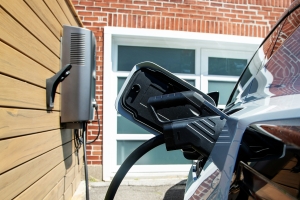
TORONTO — As Ontario’s electricity demand is projected to grow significantly over the next two decades, non-wires solutions—a term that encompasses energy storage, demand response to alleviate peak loads, energy efficiency, and decentralized power generation—are emerging as a prudent way to defer and avoid costly grid upgrades.
New analysis commissioned by Clean Energy Canada and conducted by The Brattle Group finds that distributors and system operators can achieve significant cost-savings when distributed energy resources (DERs) are leveraged to mitigate distribution system constraints. If this type of targeted DER deployment and control can be scaled across the province, it could reduce distribution capital expenditures by 5% to 11% over the next 20 years.
DERs are technologies that can generate and store energy or control load: devices like controllable water heaters, battery storage, managed two-way EV charging, smart thermostats, and solar PV, all of which the Brattle study incorporated into its model. Critically, Brattle found that the cost of deploying more DERs—including offering incentives to consumers—would be less than the total benefit they would provide in terms of avoided generation, transmission, and distribution costs.
To its credit, the Ontario government, as well as the Independent Electricity System Operator and local distribution companies, already centre energy efficiency and demand management in their planning, such as through the province-wide Peak Perks program that rewards customers for allowing the grid operator to manage their smart thermostat during peak events. But this study outlines that there is even more DER potential on top of what is currently recognized—and a need to move faster.
Brattle’s analysis fills a gap with real-world data from the Essex Powerlines system in Southwestern Ontario, illustrating that portfolios of DERs can be orchestrated to manage local distribution system load and cost-effectively defer infrastructure upgrades in many different scenarios, with deferral periods ranging from 3.5 to 8 years.
Finding ways to account for and compensate these contributions will be essential to unlocking and incentivizing more use-cases for DERs. Achieving these results also depends on acquiring the capability to manage DERs either through distributed energy resource management solutions or aggregator participation.
Overall, as the province’s electricity demand continues to grow while utilities look for ways to lower costs, deploying DERs as non-wires solutions presents a compelling alternative to the traditional investment model. Not only can this approach create significant savings for the system—and help to keep bills in check for customers—but DERs can also provide benefits like improved home comfort, lower emissions, and better resilience for communities and households.