Clean Energy Canada | B.C.’s EV sales regulation ensures British Columbians can access the cost-saving EVs they want—and should be revised, not repealed
March 20, 2026
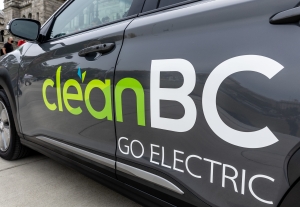
VICTORIA — Joanna Kyriazis, director of policy and strategy at Clean Energy Canada, made the following statement in response to rising gas prices and in advance of B.C.’s upcoming update to its Zero-Emission Vehicles Act and Regulation expected later this spring:
“As gas prices climb past $2 a litre in many parts of B.C., the province’s zero-emission vehicle sales regulation is more important than ever. EVs already cost far less to run than gas cars, and this policy helps ensure more affordable models are available—so more British Columbians can start saving sooner.
“According to a forthcoming analysis from Clean Energy Canada, a typical EV driver in B.C. saves around $2,600 to $3,400 per year compared to a driver of an equivalent gas vehicle, or up to $34,000 over a decade. For instance, a Toyota RAV4 currently costs over $100 to fill up in Metro Vancouver, while a similar Chevrolet Equinox (with 513 km of range) costs just $11 to fully charge.
“British Columbians are already more inclined than other Canadians to choose an EV for their next vehicle, with 53% saying so. That share is even higher in Metro Vancouver, where about seven in 10 lean towards an EV. That demand is showing up in sales, with EVs accounting for 22.5% of new car sales in B.C. in the final quarter of 2025, even as federal rebates remained paused at the time.
“As one of the leading EV markets in North America, B.C. needs a policy that reflects its growth. The zero-emission vehicle sales regulation helps ensure supply keeps pace with demand, supporting B.C.’s position rather than defaulting to a lower national standard. By 2024, the province had already nearly reached its 2026 EV sales target, two years early, while public charging infrastructure, too, is poised to meet or exceed its targets ahead of schedule.
“Ahead of the province’s upcoming update to its Zero-Emission Vehicles Act, Clean Energy Canada recommends maintaining strong targets, with any revisions from the current 90% for 2030 and 100% for 2035 set no lower than 55% for 2030 and 90% for 2035. Recent modelling and analyses from multiple organizations, including Electric Mobility Canada and BC Hydro, indicate that these targets are both reasonable and achievable for B.C.
“In addition to saving British Columbians money, the zero-emission vehicle sales regulation supports private sector investment in Canada’s EV supply chain by providing market certainty for the nearly 400 companies that directly employ over 8,000 British Columbians and contribute more than $900 million to provincial gross domestic product. It also helps improve air quality from transportation, which costs B.C. an estimated $1.3 billion per year, and reduces carbon emissions, with transportation accounting for 42% of the province’s total.
“Now is not the time to pull the rug out from under a policy that helps consumers reduce their energy costs. B.C. should complement, rather than mirror, federal policy, and take the opportunity to update an important policy that can ensure a long-term supply of cost-saving EVs for British Columbians.